
Anyone "Going Off Half-Cocked?"
Why it is So Important to Be Aware of Our Defenses, and Consistently Update Them

Ever gone off “half-cocked?” Ever over-reacted to someone and had to apologize later? Ever lost your cool before you were able to apply the brakes, resulting in an emotional escalation that got out of control? Of course, we all have.
One of the most common issues I have addressed with the majority of my clients, regardless of their “diagnosis,” is developing more effective conflict-resolution skills and emotional regulation. Whether with individuals, couples or families, we tend to be challenged at times to communicate most effectively, especially with those who are closest to us emotionally.
My “theory” is that if we can attain a consistent and accurate awareness of our defense mechanisms and appropriately update them to match the realities of the present moment and status of a particular relationship, this additional skill set can greatly enhance our ability to most effectively resolve the inevitable conflicts in all of our relationships, especially the most important ones. We are always 100% responsible for “our side of the street,” and if we can coordinate and cooperate with a willing partner, such as a spouse, this skill set can greatly contribute to avoiding the often-unnecessary damage that can occur from two, otherwise well-meaning people emotionally and verbally escalating into “World War III” over initially minor conflicts.
This theory first entered my awareness soon after I was licensed as a Marriage and Family Therapist in 1983. A movie came out that year entitled, “War Games.” A funny, yet cautionary tale of the United States Military developing a powerful computer that could take over the less intelligent human ability to plan effective defense and attack strategies to win wars, especially of the nuclear type.
Enter a young teenager who spent much of his time playing video games but also demonstrated a high level of understanding and skill at how computers operated, which at the time, personal computers were new to the public. He began to use this talent to hack into his school’s computer and summarily change his and some of his friend’s grades, for the better of course. By accident, he accidentally hacked into the War Operating Plan Response computer (WOPR), located at the North American Aerospace Defense Command (NORAD), located in Colorado Springs, Colorado. He believed he was playing a Thermal Nuclear War video game, and you can imagine the resulting plot.
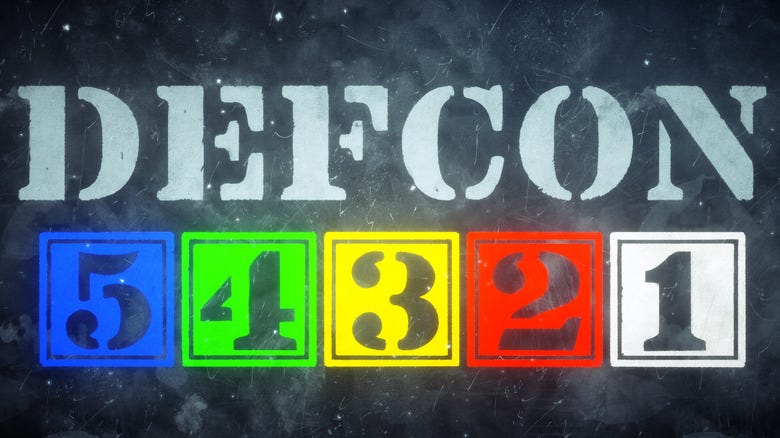
At NORAD, prominently located, was the Defense Readiness Condition (DEFCON) sign, which depicted the 5 levels of defense readiness that the US Military uses to discern their appropriate preparedness for war, depending on present intelligence. They developed this system back in the 50s to ensure the US’s responses to potential threats would be most appropriate and most effective, based on the present threat level, in order to avoid a disastrous over reaction. Below, is a chart briefly depicting the 5 levels. The sign is usually reversed, with Defcon 5 on top.
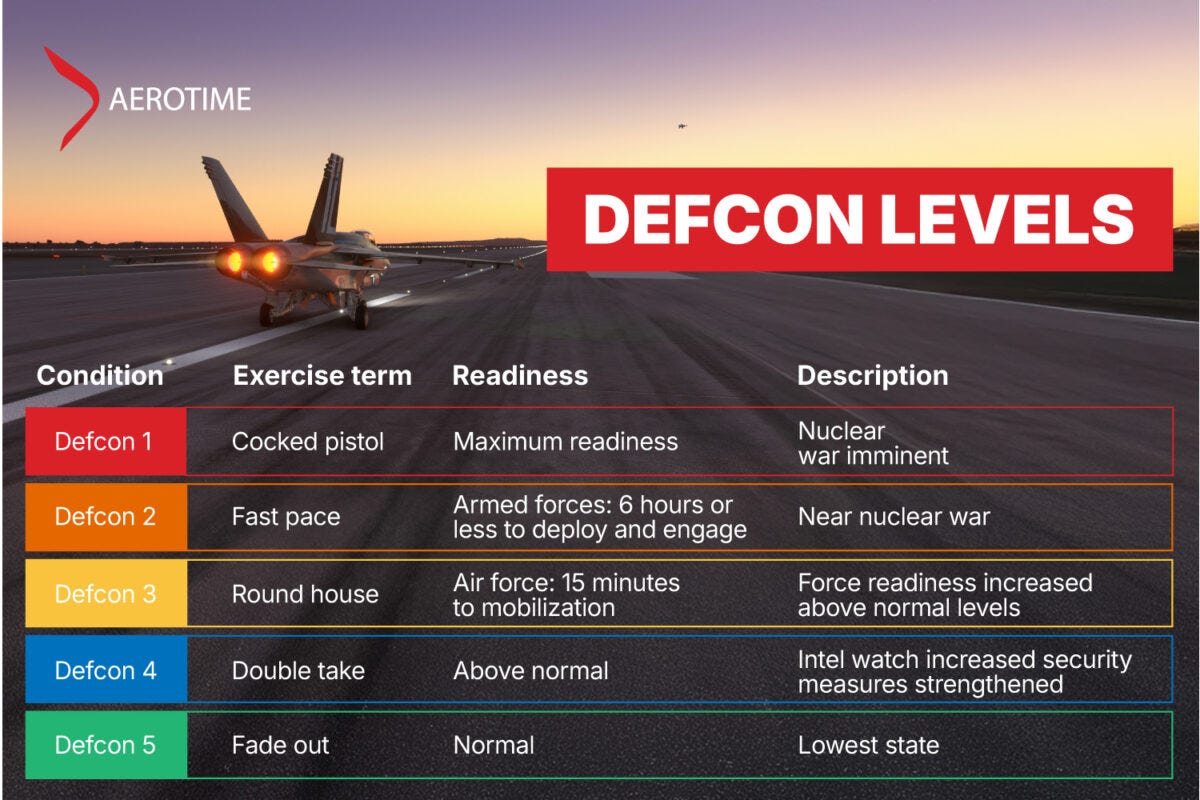
NORAD does not publicly communicate the present Defcon level, but it is estimated that, given the recent global activities, the present Defcon level is at 3. The last time the level was at 2 was during the Cuban Missile Crisis in 1962, yet given the present-day fear mongering demonstrated by the media and politicians, many fear that we are moments away from an all-out nuclear war. This negatively distorted perception could unfortunately contribute to the wrong people jumping to the wrong conclusions and decisions, thus perpetuating the very thing we fear most.
Soon after seeing this movie, I was working with a couple for about 4 or 5 sessions, and they were making rapid progress after deteriorating over the last 7 years or so of their 15-year marriage. We just wrapped up another productive session, and I was waiting for my next couple to come in. They arrived a few minutes late, and exclaimed, “did you see the commotion in the parking lot? Some couple is freaking out on each other, and the police just arrived.” I walked out to see who it was. It was my last couple. How could this be? They were doing so much better. After debriefing this embarrassing event in their next session, we discovered that as much as they were enjoying the changes in each other’s behavior, they had not consciously updated their defensive posture or foundational perceptions of each other. All it took to move to DEFCON 1 was a sarcastic comment from the wife as they were leaving the last session.
Subsequently, one of the most common statements I make to most all of my couples is, “The hardest thing each of you will be challenged to do in improving your marriage will not be in making the necessary behavioral changes in yourselves, it will be challenging, updating and changing your perceptions and beliefs about one another.”
I have successfully used my “theory” and developed a set of interventions over the years that I have found helpful for individuals, couples and families, but I have never written anything down or sufficiently articulated the interventions until now. For the purposes of brevity, I will illustrate this framework with a married couple in conflict, given that conflicts in our marriages are, for a number of reasons, the most challenging many of us will ever face.
For the purposes of this paper, I will not be going into any depth or definition of the most common defense mechanisms humans utilize, though I would strongly suggest “Googling” yourself a brief primer to familiarize yourself with the most common ones, and especially identifying the ones you use the most when you feel threatened or experience a trauma. We all have defense mechanisms that we use on a consistent basis, most of time unconsciously, and we tend to rely on two or three most of the time.
Psychological defense mechanisms are instinctual and essential for our survival. It is very important to be aware that, by design, defense mechanisms are meant to be used temporarily until the threat has been eliminated or the trauma has been healed or grieved. Unfortunately, the implementation of our defenses is automatic, the “off switch” is not. This makes sense from an evolutionary standpoint and survival, but if we seek intimacy, growth and trust in a relationship, we must get out of “automatic pilot.” Not only does the average person not update their otherwise primitive or immature defenses, such as regression, they tend to retain a defensive posture or reactions that are no longer appropriate or necessary, which then perpetuates the negative state they are in and wish to improve. This is why resentment and bitterness are so corrosive.
Below is a chart depicting the DEFCON levels for marriage, switching the exercise terms, and description of the military’s levels with the emotional state, defenses utilized, and then adding a therapeutic intervention unique to that level, in order to move out of that level to the one above. If the relationship is long term, this will be a gradual growth process. There is no “Fast Pass.” I have seen many couples over the years severely damaged by an affair. A few have called me after the first 2 or 3 sessions to thank me for all my help, and state they are “good to go.” _ __________________________________________________________________________
Marriage DEFCON Readiness Scale
by Rick McCarthy, LMFT
“A practical framework for understanding emotional escalation, psychological defenses, and pathways to repair in marriage and committed relationships.”
🟢 DEFCON 5 — Harmony Zone (Peaceful Connection)
Descriptor: Relationship stability and trust; communication is warm, open, and safe.
Emotional State: Calm, secure, affectionate.
Typical Defenses: Minimal defenses; healthy vulnerability and empathy.
Therapeutic Focus / Intervention:
Maintain rituals of connection, gratitude, shared goals, humor, and reflection. Reinforce empathy and mutual respect. Heaven on earth.
🔵 DEFCON 4 — Caution Light (Subtle Tension)
Descriptor: Slight irritations or emotional drift beginning; early signs of sarcasm or withdrawal.
Emotional State: Mild frustration, defensiveness.
Typical Defenses: Rationalization, minimization, mild projection.
Therapeutic Focus / Intervention:
Recognize tension early; use gentle communication and curiosity. Name feelings before they harden. Seek early repair. Quick to apologize and forgive.
🟡 DEFCON 3 — Storm Warning (Active Conflict)
Descriptor: Arguments and emotional reactivity surface; communication deteriorates. The majority of couples enter marriage counseling in this state, after adapting sometimes for years.
Emotional State: Anger, hurt, defensiveness, fear.
Typical Defenses: Projection, denial, displacement, reaction formation.
Therapeutic Focus / Intervention:
Practice time-outs and de-escalation. Validate each other’s emotions. Reaffirm commitment and shared purpose. Move back to DEFCON 4 ASAP.
🟠 DEFCON 2 — Fragile Bridge (Relationship in Crisis)
Descriptor: Emotional safety is breaking down; trust severely shaken.
Emotional State: Fear, despair, hopelessness, rage.
Typical Defenses: Splitting, regression, passive aggression, intellectualization.
Therapeutic Focus / Intervention:
Crisis containment and boundary repair. Focus on rebuilding safety and security before problem-solving and growth. Usually, will need structured therapeutic dialogue.
🔴 DEFCON 1 — Relational Meltdown (All-Out War)
Descriptor: Relationship breakdown imminent or underway. Emotional, verbal or physical abuse may appear.
Emotional State: Rage, contempt, numbness, detachment.
Typical Defenses: Total projection, narcissistic rage, dissociation, devaluation.
Therapeutic Focus / Intervention:
Emergency intervention: prioritize safety and stabilization. Individual therapy or structured separation. Reconciliation possible only after calm and accountability. _________________________________________________________________________
The following is a brief strategy that a couple can develop into a consistent ritual to help them from unnecessarily and unconsciously inflicting damage to their relationship:
🕊️ De-escalation Pathway
To return from DEFCON 1 to DEFCON 5, partners must:
Pause and name the level (e.g., “I think we’re at DEFCON 3, let’s reset”).
Regulate emotions through deep breathing, prayer, or taking a calm space.
Re-engage gently with empathy, humility, and accountability.
Reaffirm unity and love as shared guiding values. Reestablish a solid premise.
I believe my fellow clinicians can benefit from helping their clients understand and learn from the conscious awareness of their defenses, and to appropriately update and develop healthier and more mature ways of navigating conflict, by utilizing the following brief suggestions:
🧠 Clinical Use
Therapists can use this color-coded model to help couples visualize conflict progression and identify psychological defenses. It promotes:
Self-awareness and emotional regulation.
Early intervention before emotional damage escalates.
Empathy-based repair, using shared language (e.g., “DEFCON 4 check-in”).
Oftentimes, sadly, a relationship may have deteriorated to a place where there are no longer mutual goals to repair and grow or mutual cooperation. It is very challenging to help a couple grow to a healthier defense condition if they have spent years reinforcing these destructive defense mechanisms out of self-preservation. I have found many couples have learned to adapt to a relationship they would never have chosen initially. My hope is that some of these tools and insights can be used to enable individuals, couples and families attain the “Harmony Zone.”
“Peace is not the absence of conflict, but the presence of understanding, humility, and forgiveness.” Dalai Lama
I suppose what worries me is that I am perceiving a breakdown in emotional regulation capacity. I wrote about that yesterday is my dog article. Are hurt and abandoned people acting out their rage and reactivity through their dogs? I think so.